Evolvement
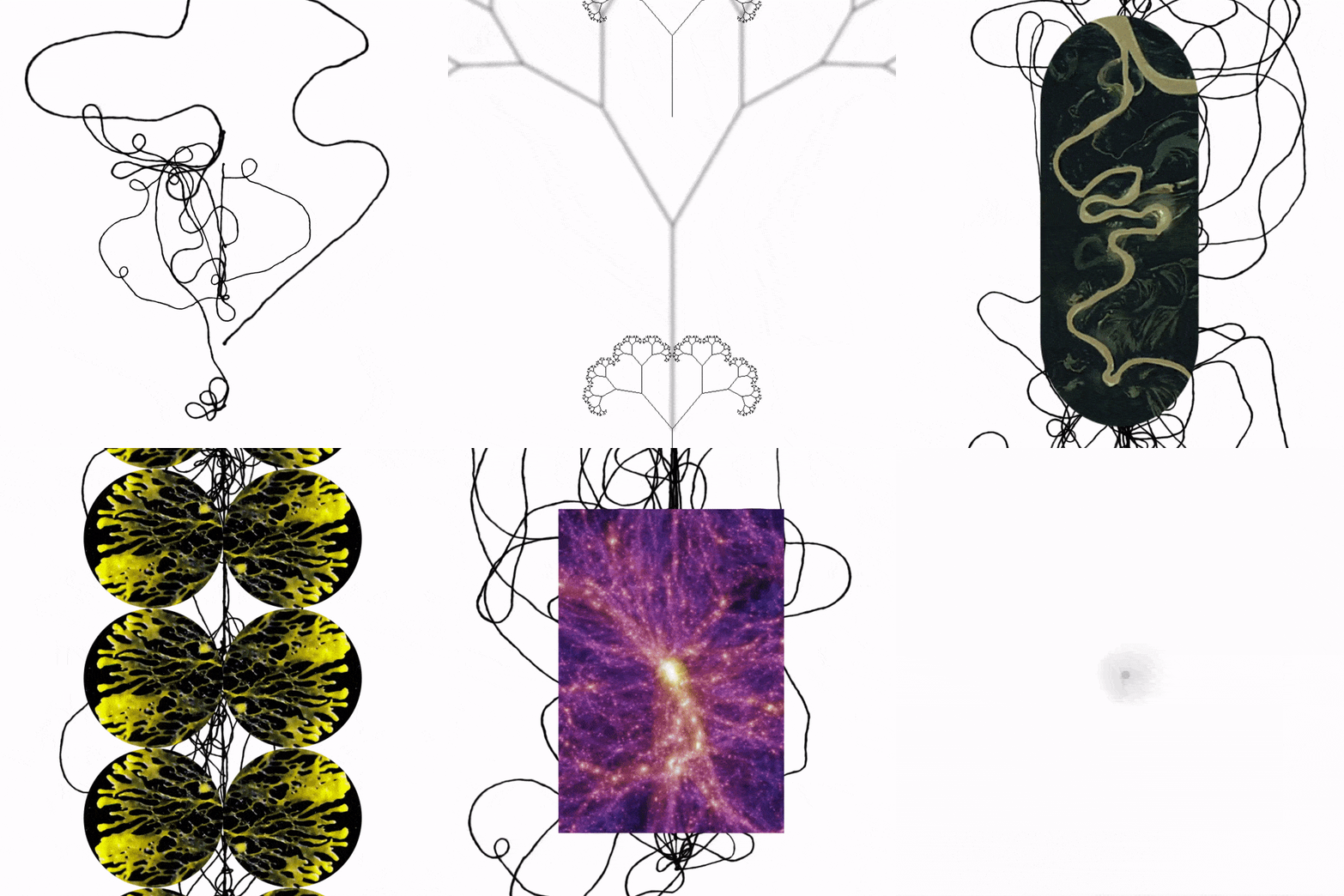
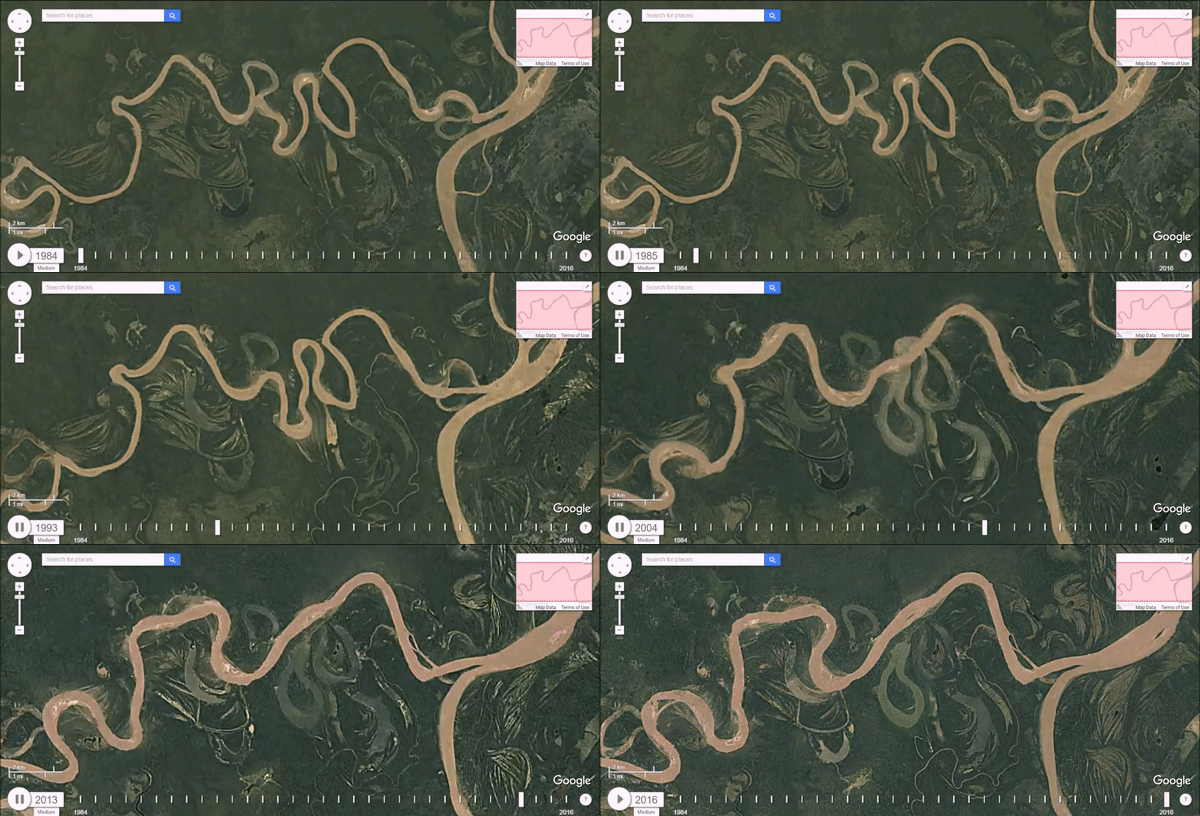
Evolvement depicts a fundamental law of physics called the principle of least action, which evolves physical systems in such a way that a given amount of energy is distributed in the most efficient way possible. Over time, these processes eliminate all trivial variables and reach their simplest forms, observable throughout space, from subatomic attractions to chemical and biological systems, meandering rivers to continental movements, planetary systems to galaxy clusters.
Biology follows the same tendency without intending to. Living systems don't work against the pull toward disorder, they emerge from it. Structures that capture and dissipate energy efficiently tend to persist and spread, simply because they do it better than the alternatives around them. A living organism is one configuration among many that this law produces, refined over time the same way a river settles into its shortest path or a planetary orbit finds its most stable form.
This fundamental law shapes nature toward its most elegant form, in a galaxy cluster and in a single cell alike, and that is what inspires this work.
Sound design by Anil Duran
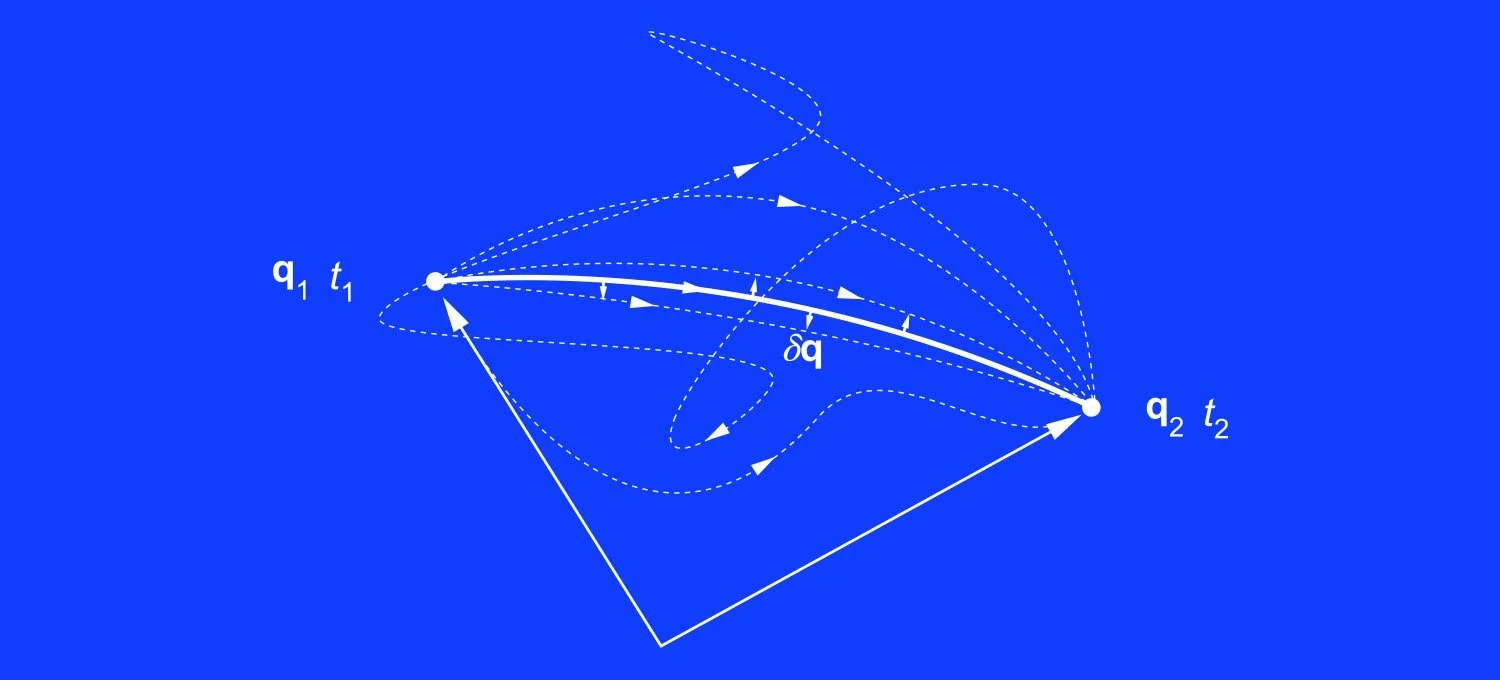
The principle of least action – or, more accurately, the principle of stationary action – is a variational principle that, when applied to the action of a mechanical system, can be used to obtain the equations of motion for that system. It was historically called "least" because its solution requires finding the path of motion in space that has the least value.
The principle can be used to derive Newtonian, Lagrangian, and Hamiltonian equations of motion, and even general relativity (see Einstein–Hilbert action). In relativity, a different action must be minimized or maximized.